Your Cart is Empty

Choosing the best bike for your family isn’t really about finding the “best bike” overall. It’s about finding the right bike for the rider, the terrain, and the kind of riding your family will actually do.
For most Westchester families, that means a mix of neighborhood rides, paved paths, weekend trailway rides, parks, short town rides, and maybe some light gravel or packed dirt. A bike that works beautifully for one child may be wrong for another. A parent who wants relaxed rides with younger kids may need something completely different from a parent who wants longer fitness rides on paved trails.
The simplest answer is this:
For most Westchester families, the best kids’ bike is lightweight, properly fitted, easy to stop, and matched to the child’s confidence level. The best parent bike is usually a comfort bike or hybrid bike, depending on how far and where you plan to ride. For paved paths like the North County Trailway, most families do well with properly fitted kids’ bikes, hybrid bikes, comfort bikes, and path-friendly bikes. For rougher terrain, wider tires and more stability matter.
That’s the practical starting point.
At Hickory & Tweed in Armonk, families can call or stop by to look at the current bike selection and get help choosing the right setup for kids, parents, and weekend rides around Westchester. That matters because family bike buying is one of those decisions where fit, weight, comfort, and confidence are hard to judge from a screen.
The easiest way to buy the wrong bike is to start with the bike itself.
A mountain-style bike may look rugged and exciting, but if your child mostly rides on pavement, it may feel heavier and slower than necessary. A very casual comfort bike may feel great for short neighborhood rides, but it may not be the best choice if you want to ride longer paved paths. A bike that looks like a good deal online may end up being too heavy, too tall, or poorly suited to the rider.
The better question is: where will this bike actually be ridden?
For many families in Westchester, the answer is not one single place. Kids may ride around the neighborhood during the week, then join the family for a paved path or trailway ride on the weekend.
Parents may want something comfortable enough for relaxed rides but efficient enough that they don’t feel like they’re working too hard. Older kids may want a bike that can handle some mixed surfaces, while younger kids need something simple, stable, and confidence-building.
Once you think about the ride first, the bike choice gets much easier.
Smooth pavement calls for a different setup than packed gravel. A rail trail calls for a different bike than a rocky dirt trail. A child learning to ride needs a different bike than a confident older kid who wants to explore parks, paths, and uneven ground.
The right bike should match three things: the rider, the surface, and the real-life use.

There are a lot of bike categories, but families don’t need to overthink all of them. Most family bike decisions come down to a few practical types.
A balance bike is usually the best first step for very young children. It helps kids learn balance, steering, and stopping before they have to worry about pedals.
A first pedal bike should be light, simple, properly sized, and easy to control. For younger kids, confidence matters more than extra features.
A hybrid-style kids’ bike is often a great choice for older children who ride in the neighborhood, on paved paths, and on casual weekend routes.
A mountain-style kids’ bike makes more sense when the child is regularly riding on dirt, grass, gravel, or rougher park terrain. It may not be the best choice if most riding is on pavement.
A comfort bike is a strong option for parents who want an upright, relaxed ride for neighborhood loops and casual family outings.
A hybrid bike is usually the most versatile parent bike. It can handle paved paths, town riding, family rides, and light fitness riding without feeling too aggressive.
A mountain bike is best when the riding is truly off-road, with dirt, roots, rocks, or rougher terrain.
That’s the broad framework. The real decision comes down to fit and use.
With younger riders, the goal is not speed. It’s confidence.
A child who feels nervous on a bike won’t want to ride very far. They may avoid turning, panic when stopping, or ask to go home after ten minutes. That usually doesn’t mean they dislike biking. It often means the bike doesn’t fit well, feels too heavy, or gives them too much to manage at once.
For toddlers and preschool-age kids, balance bikes are often the best first step. Without pedals, kids can focus on the hardest part of riding: staying balanced while moving. They can push with their feet, coast, steer, stop, and gradually build the body control that makes the move to a pedal bike much easier.
Once a child is ready for pedals, fit becomes the biggest factor.
This is where parents sometimes make a very understandable mistake. They buy a bike that’s too big because the child will “grow into it.” It sounds practical, especially when kids grow quickly. But if the bike is too tall, too heavy, or too awkward, the child may never feel comfortable on it.
A better first pedal bike should fit the child now. They should be able to get on and off safely, reach the handlebars and brakes, stop without panicking, and feel like they’re controlling the bike instead of the bike controlling them.
That’s also why bike weight matters so much for kids. Adults don’t always notice a few extra pounds, but a child definitely does. A heavier bike is harder to start, harder to stop, harder to steer, and tougher to manage on hills. For a young rider, a lighter bike can be the difference between “I love this” and “I don’t want to ride.”

This is one reason families sometimes look at better-fitting kids’ bikes like Woom. Woom kids’ bike options for families who want a lighter, more child-specific bike. The point is not the brand name alone. The point is that a lighter, properly proportioned kids’ bike can make riding feel easier and more natural.
As kids get older, their riding personality starts to show.
Some kids are cautious and prefer smooth neighborhood rides. Some want to cruise on paved paths with their parents. Some like riding over grass, packed dirt, and uneven park areas. Others are ready for more adventurous trail riding.
The right bike depends less on age alone and more on what kind of rider they’re becoming.
For many Westchester kids, a hybrid-style bike is a great middle ground. It’s comfortable enough for casual riding but efficient enough for paved paths and longer weekend outings. It usually makes sense for kids who ride in the neighborhood, join family rides, and need one bike that can handle a little bit of everything.
A mountain-style bike is better when the riding gets rougher. If your child is regularly on dirt, gravel, grass, or uneven surfaces, wider tires and a more stable feel can help. But it’s worth being careful here. A mountain-style bike is not automatically better just because it looks more durable. If most of the riding is on pavement, the extra weight and tire resistance can make the bike feel harder to pedal.
For older kids and teens, a path or fitness-style bike can also be a smart next step. These bikes are usually more efficient for longer paved rides while still being more approachable than a road bike. They’re a good fit for teens who want to ride farther with the family or use biking as part of a more active routine.
The point is not to pick the coolest-looking bike. It’s to pick the bike that fits the child’s real riding habits.
Family biking works better when the adults are comfortable.
A lot of parents focus so much on the kids’ bikes that they forget about their own riding experience. But if your bike feels awkward, uncomfortable, too aggressive, or too inefficient, you’re not going to be excited about getting out for weekend rides either.
For parents who want relaxed neighborhood rides, a comfort bike can be a great fit. The riding position is more upright, which usually feels easier on the back, neck, and shoulders. It’s not built for speed, but it’s excellent for casual riding with younger kids.
For parents who want one bike that can handle more situations, a hybrid is usually the strongest starting point. A hybrid bike can work for paved paths, town roads, family rides, and light fitness riding. It gives you a nice mix of comfort and efficiency without feeling too specialized.
If you want something that can handle rougher pavement, packed gravel, and longer weekend routes, an all-terrain or gravel-capable bike may make sense. That type of bike gives you more flexibility when the surface is not perfectly smooth.
A true mountain bike is the right choice when you’re actually riding trails with dirt, roots, rocks, and rougher terrain. But for most family rides on pavement and rail-trail style routes, a mountain bike may be more bike than you need.
The best parent bike is the one that makes you say yes more often.
Westchester gives families a good mix of riding options, but not every route is right for every rider or every bike.
For younger kids and newer riders, paved paths and low-stress routes are usually the best place to start. A trailway-style ride gives families room to build confidence without dealing with constant car traffic. The North County Trailway is one local example many families know. It’s a paved pedestrian and bicycle path that runs through northern Westchester, which makes it a better fit for families looking for a smoother path-style ride than for people looking for rugged mountain biking.
That distinction matters.
A paved trailway is generally well suited for properly fitted kids’ bikes, comfort bikes, hybrids, and path-friendly bikes. It’s not the place where you need an aggressive trail bike unless you simply prefer that style. For families with younger kids, the bigger things to think about are distance, road crossings, crowds, and whether your child can ride predictably around walkers, runners, and other cyclists.
For park riding, packed dirt, gravel, grass, or uneven surfaces, bike choice becomes more important. A narrow-tire bike may not feel stable enough. A comfort bike may not be ideal if the surface gets rough. A hybrid can usually handle some packed surfaces, especially with the right tires, but once the ground gets looser or more uneven, a mountain-style bike may be the better fit.
This is where it helps to be honest about how the bike will be used.
If your child mostly rides neighborhood streets and paved paths, don’t overbuy a bike meant for rugged trail use. If your family likes exploring rougher areas, don’t choose something too narrow or pavement-focused. The more accurately you match the bike to the terrain, the better the rides will be.
Here’s a simple way to think about it.
If your child is still learning balance, start with a balance bike.
If your child is ready for pedals, choose a lightweight first pedal bike that fits now, not one that feels too big.
If your child rides mostly around the neighborhood and on paved paths, look at a hybrid-style kids’ bike or a lightweight kids’ bike with smooth, efficient tires.
If your child rides on grass, gravel, packed dirt, or rougher park terrain, consider a mountain-style kids’ bike or a wider-tire option.
If you’re a parent who wants casual rides with younger kids, look at comfort bikes.
If you’re a parent who wants one bike for paved paths, town rides, and weekend fitness, start with hybrids.
If your family plans to ride rough trails, roots, rocks, and dirt, then mountain bikes make more sense.
The best choice is not the most technical choice. It’s the bike that removes friction and makes riding easier to repeat.
Size charts are helpful, but they’re not enough.
Two kids of the same age may need different bikes. One may be taller but cautious. Another may be smaller but confident. One may be strong enough to handle a bigger bike, while another may need something lighter and more manageable.
Height, inseam, strength, confidence, riding experience, and terrain all matter.
The same is true for parents. A bike can technically be the right size and still feel uncomfortable. Handlebar position, saddle comfort, riding posture, tire type, and frame style all affect how much you’ll enjoy riding.
That’s why in-person fit is so valuable. You can tell quickly whether a child feels comfortable, whether a parent feels too stretched out, or whether a bike is too heavy for the rider.
A good bike should feel natural. It should make the rider feel more capable, not more cautious.
Sometimes they do. Sometimes they don’t.
For younger kids, simple is usually better. If a child is still learning how to brake, steer, start, and stop, gears can be one more thing to worry about.
But as kids get older and rides get longer, gears become more useful. Westchester has plenty of hills, and the right gearing can make climbing feel much less frustrating.
A child who rides mostly on flat neighborhood streets may not need much gearing. A child riding longer paved paths or hillier routes will usually benefit from having easier gears. A more adventurous rider on mixed terrain needs gearing that matches the ride.
The goal is not to add complexity. The goal is to make the ride easier.
The bike itself matters, but the setup matters too.
A properly fitted helmet is non-negotiable. It should sit level, feel snug, and stay in place without sliding backward. Brakes should be easy to reach. Tires should be properly inflated. The seat height should make sense for the rider’s size and confidence level.
For family rides, it also helps to have a few basics: water, a lock if you’re stopping somewhere, lights for visibility, and a small way to carry snacks, a phone, or basic tools. You don’t need to turn a casual ride into a full expedition, but a little preparation makes the day smoother.
Before longer rides, a quick bike check can save a lot of frustration. Tire pressure, brakes, chain condition, and seat height are all worth looking at before you’re already on the path with the kids asking why something feels wrong.
If the bike has been sitting for a while, it’s worth having it checked before a bigger ride. Brakes, tires, tubes, chains, shifting, and loose parts can all turn a fun family outing into a frustrating one if they’re ignored.
You can research bikes online, but choosing a family bike is still much easier in person.
That’s especially true with kids. You can see right away whether a child feels comfortable on a bike. You can tell if they’re reaching too far, sitting too high, struggling with the weight, or feeling unsure. Those details are hard to judge from a size chart.
It also helps parents avoid buying the wrong style. A family may come in thinking they need one type of bike and realize that a different option fits their actual riding plans much better.
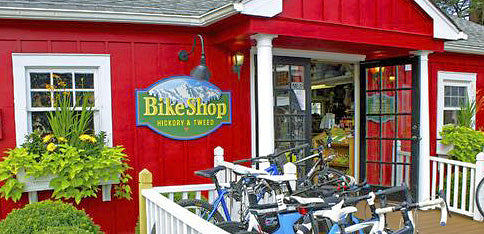
For Westchester families, Hickory & Tweed in Armonk is a practical place to start. You can call the shop with questions or stop by to check out the current bike selection. The team can help you think through fit, riding style, terrain, accessories, and what makes sense for your child or family.
That kind of guidance is often the difference between a bike that technically works and a bike that actually gets used.
For many families, the best all-around setup is a properly fitted kids’ bike for each child and a comfort or hybrid bike for the parent. Hybrid bikes are especially useful because they work well for paved paths, neighborhood rides, town riding, and weekend family outings.
Because the North County Trailway is a paved pedestrian and bicycle path, families usually do well with kids’ pedal bikes, hybrid bikes, comfort bikes, and path or fitness-style bikes. A true mountain bike is not necessary for that type of paved trailway ride unless the rider simply prefers one.
Usually, no. A bike that is too big can make a child feel nervous and less in control. Kids are more likely to ride when the bike fits them now, feels manageable, and lets them start, stop, and steer with confidence.
For many families, yes. A lighter bike is easier for a child to start, stop, steer, and handle on hills. That can make riding more enjoyable and help kids build confidence faster.
A mountain-style bike can be a good fit if the child rides on dirt, grass, gravel, or uneven terrain. If most of the riding is on pavement or paved paths, a lighter hybrid-style or path-friendly kids’ bike may be easier and more enjoyable.
Most parents should start by looking at comfort bikes and hybrid bikes. Comfort bikes are great for relaxed neighborhood rides. Hybrid bikes are better if you want one bike for paved paths, family rides, town riding, and light fitness.
Bring your child to a bike shop when they’re between sizes, outgrowing their current bike, learning to ride, switching to a larger wheel size, or riding more often. In-person fitting helps avoid buying a bike that’s too big, too heavy, or wrong for the terrain.
The best bike for a Westchester family is the one that makes riding feel easy to start and easy to repeat.
For young kids, that usually means lightweight, simple, confidence-building bikes. For older kids, it means matching the bike to their riding style and the terrain they’ll actually use. For parents, it means choosing comfort, control, and the right level of efficiency for family rides.
Westchester has plenty of opportunities for biking, from neighborhood loops to paved trailways and weekend path rides. But the bike has to fit the rider and the ride.
Whether you’re choosing a first pedal bike, upgrading a growing child, looking at Woom kids’ bikes, or trying to find the right bike for yourself as a parent, Hickory & Tweed can help you narrow the options.
Call the bike shop or stop by to check out the selection and get guidance before your next family ride.